Saturday, August 28, 2010

The Grind

They call it “the Grind”.

    MtFairweatherSunset

That time between the exciting early days and the end of the season.  The fish are bigger, but the weather is changing already.  Days are getting shorter at a noticeable rate, and there is a sense of something different in the air, a tangible feeling of autumn.  The temperature hasn’t changed much, still around 46-50 degrees, but Monday morning there was a new bite to the eastern breeze.    The wind shifted to the east for one of the first times I can remember since being here, and we had the first gale force winds since we came to Cross Sound.  A strong weather front moved across the Gulf of Alaska towards Kodiak and gave us a real blow.  The patterns shifted from summer to fall mode, and with it the mood.  For the first time since being here, we have allowed ourselves to think of winding up the season in a few weeks, and suddenly, we are ready.  When you know that you have a couple of months at least to go, you just put it all aside and focus on the daily grind, but once you begin to think about the end of season and the trip home, things change!  Hot tub, Willie, the garden, playing music again… wow!  We do have another life that isn’t all about staying afloat!  But for at least a couple of weeks more, the Grind! 

The mail plane…

MailPlane

A number of boats have already pulled out this morning, but we are in the inner harbor, and the tide is minus 0.4ft, not enough depth in the channel for our 6 foot draft to clear.  We’re soaking up the last minutes of relative security tied to the dock, and then off again.  Steve, with his shallow draft boat, has already left, and reported calm seas – I like it!  Hopefully there will be a lot of fish moving through, and we’ll manage to snag a few.  The picture shows a typical coho – we’ve been catching 30 – 50 of these a day, and they do add up.  LateAugustCoho   It’s been a while since we had a 75 fish day, and everyone is complaining about how slow things are.  A couple of 100 plus days would sure help pay the bills! 

Lovie is groaning a bit this morning – she came down the ramp at low tide yesterday, stepped onto the slick, wet wooden dock and had a great fall.  Nothing broke, but she is pretty stove up today.  I think the fun and excitement has worn off for her now, and she’s ready to head back to a less demanding lifestyle for a while.  Neither of us are as young as we once were, and the sheer physical effort of the life does wear on one a bit.  There isn’t much that doesn’t hurt on me, and I know it’s even harder on her.  Ah, riches and adventure – paid for with Advil and Bag Balm! 

We’ve met 2 of the previous owners of our boat since being here, and that topic should probably be another post.  During this layover, an old man with a cane and black Lab hobbled down the dock, and told us he was the one who brought the True North up from Tacoma, brand new.  He now fishes a little 26 foot hand troller, and had some interesting tales about early days.  More later.

Well, we better get out of here – I am anxious to see if the gear holds up – still a little nervous after losing so much of it.  I shifted to lighter weights on my heavies, from 60 lbs to 45 lbs to save wear and tear on my worn out gurdies.  If they will just last the season, I’ll have them rebuilt – if I catch enough to pay for it!

With the fleet all in for the storm, there was an impromptu going away party for the girl that works at the General Store, going back to Washington for college.  Boardwalk Several of the fishermen brought out their guitars, mandolins, fiddles, and harmonicas, and played out on the deck by the store while folks visited around.  Not drinkers or party hounds, Lovie and I weren’t participating, but on our evening stroll over to the rest room, we stopped and leaned on the rail overlooking the harbor entrance.  The music was good, and the moment was almost magical – dusk, the gurgle of the receding tidewaters, the plink of the banjo and the blue notes of the harmonica – life is good.  Holding hands, we savored the moment, and quietly watched the evening light fade.  Onwards.

Fish On!

Wednesday, August 25, 2010

A Midnight Drama

Ok, I’ll admit it.  I’m still shaking just a bit, and it’s one in the morning, Wednesday August 25.  We are tied to the outside dock at Elfin Cove, with our buddy Steve tied alongside.  It’s been a day.  I wrote a post this  morning (yesterday, now) and didn’t get it online because coverage was poor, and now, this one will preempt it.  So, bear in mind, things are a bit out of sequence.

We started the morning in a leisurely manner after the gale force blow you will read about next, and headed out with the rising tide to the fishing grounds.  I was uncomfortable with the state of my new troll wire, which seemed to be turning rusty brown with only one day’s usage, and I began to detect small pits in the wire where it contacted the waterline.  Having lost not one but two full lengths with gear attached, I decided to examine things closely before I put gear out.  We dropped the starboard heavy down to the 20 fathom mark, and sure enough, about 12 feet of the wire was brown and pitted, with failure eminent.   BurnedWire  I did a voltage check on the line, connecting a ground wire directly to the battery terminal and then touching the troll wire.  Normally, I would expect a reading of 0.4 to 0.6 volts DC, a reading I had  observed last week when checking it after the unexplained failure of the wire.  Today, it read 8.4 volts, an extremely high reading, which basically told me my wire was acting as a welding electrode, arcing away at the waterline, destroying things as it  went.  Wow!  We began to troubleshoot, turning off switches, and decided there was a dead short in the hydraulic clutch which charged the hydraulic fluid and passed the high voltage on into my lines.  I immediately pulled the test line in, and we headed back to the Cove to troubleshoot further.  Verifying my suspicions,  we were able to order a new clutch assembly which hopefully is on the float plane scheduled for mail and freight delivery tomorrow morning.  Fish are running, weather is calm, and it’s time to be out there, not tied to the dock!  We spent the remainder of the  day cutting out the damaged sections of wire on each gurdy and splicing on new pieces to have enough to fish with.  Hopefully, we found the problem and can continue to fish. 

After a day of repairs, we were winding down with a supper of a small codfish with fried potatoes, and my cell phone did it’s little “bing-bong” thing that indicates a text message.  I checked, and it was our friend Steve, who is still out fishing with his father in the small boat I have described before.  Steve   It was dark outside, 8:33 pm to be precise, and the denizens of the Cove were mostly retired to their boats for the evening.  “May have trouble” was the short message.  “What and Where” was my reply.  A few minutes of waiting, and the reply was “Engine overheated off Column Point.  May need tow.”  Several messages later, it was obvious Steve was having troubles that wouldn’t just go away.  His engine had begun to overheat, and after some avid troubleshooting, he found it was unable to run at all without being terminally damaged.  He is now about 2 miles offshore, adrift in the dark, with the tide running at about 3.5 knots pushing him back into South Inian Pass – remember that?  The nightmare cauldron we came thru to get here?  If not that, then a pretty certain crash on George Island or Gaff Rock would make a mess of things.  For the time being, they were just there, adrift in the middle of Cross Sound.  I told Kurt, who was tied up next to us, that we would go get Steve.  He asked if I was ok with that, and offered to stand by on the radio for moral and technical support.  I felt that the weather, very calm, flat seas, was suitable for my skill level, and we fired up the True North.  Did I say it was dark?  And raining?  It still is.  But, having a floodlight on the cabin roof, as well as a hand-held spotlight like we used to use for coon hunting in Texas, I felt prepared.  Oops, big mistake.

We had no  more cast off from the dock, than I discovered that my visual ability was – zero.  Lovie was on deck shining the floodlight on the channel markers, and I could only see the big reflective outlines, nothing else.  No shore, no rocks, nothing but the nice flag we had on our forward stay, shining to beat the band in front of my eyes.  I told her to go rip it off, and that helped a bit – I just saw nothing, instead of a flag!  Pointing the boat in the direction I hoped was correct, I continued.  The Gut, as it is called, is about 20 feet wide, 100 feet long, and has 6 feet of water at 0 tide level.  We were at 2.2,feet over 0 level, enough to clear in mid channel, but I was far from certain that we were actually in mid channel.  Tide was rushing in like a river, so I had to keep the engine revved to maintain steerage.  A few frantic words between us, and all I got from her was, “I can’t see anything but rain!”  Onward.  I was able to get the computer to show me where we were and the course I had to take to  clear the rocks at the mouth, but things were happening too fast to be certain about anything.  I kept following my GPS course, and Lovie desperately tried to see either shore with the floodlights.  Blinded inside by radar, computer, radio, and sounder lights, I was only able to trust what I saw on screen.  Blinded outside by limitations on the lighting, she only was able to tell me when we were almost touching the rocks alongside.  Finally, the indications were that we were outside the harbor mouth, and could take the first breath.  I put the boat on autopilot, just creeping along at 3 knots, and re-evaluated the situation.  Luckily, I had plotted a “go-home” course line on the chart, leading more or less to the general location Steve had given as coordinates.  I put Lovie on the wheel, telling her to not deviate from the course line, and I went outside to watch for logs and other floating dangers on the incoming tide.  Steve was about 3 miles away, still drifting toward an uncomfortable destination at best. 

I didn’t dare put down my stabilizers, knowing that I would only have to pull them to approach Steve, so the ride was a little rolly as we went out past Granite Cove and thru “Scarey Corner”, the passage between Three-Hill Island and Gaff Rock.  The tide makes whirlpools here, and we were battling a full flood of 3.5 knots.  Off in the distance we could see a wee anchor light at the general location we had for Steve, and we headed for it.

The calm, reassuring voices on the radio offered advice and suggestions on how to approach Steve, how to rig the tow line, how to proceed towing without getting the line fouled in our prop (!! not a good thing!!), how to tie up when returning to the harbor, how to dock.  Thanks, Kurt!!  A couple of other voices joined in, apprising us of light locations, current data, dock conditions, possible anchorages, and so forth.  Wow, what a consolation and encouragement.  Those crusty, piratical, socially questionable fishermen,  calm, collected, full of the right wisdom, there for the next phase should we require more assistance.  Can I ever explain the feeling?  Probably not, but it brought me thru.

Finally, the little light, drifting ever closer to Inian Pass, was within an eighth of a mile.  I had Lovie cut the power, and we slowly bumped ahead until I could verbally reach Steve, and see him standing there in the stern of his boat.  I put it in neutral and rigged a line (thanks, Orin, it was the white nylon one you brought us on a spool before you went East!) from the central cleat on the stern.  Carrying it forward to the bow, I passed it to Steve, where he secured it to his bow.  Then, keeping it out of the water, I began to slowly move forward, passing him, taking out the slack.  Once he was behind us, in tow, I began to try to figure out where we were, and where we were supposed to be going.  It was a bit disorienting, as I could now not turn very quickly lest I entangle him, and I could not see any landmarks in the pitch blackness.  Once again, looking at my screen, I managed to slowly move forward.  The nav program shows a 15 minute projected course, or where you will end up in 15 minutes if you continue to travel in your current direction, and that showed us predicted to land somewhere in the middle of  George Island.  I increased speed, to beat the pull of the tide, and slowly, so slowly, my course came round to  pass between the obstructions, and back to Elfin Cove.  We briefly considered stopping at an anchorage in Granite Cove, as it was near and a tender was anchored there, but I had never been inside the anchorage area, and besides – my hydraulics are still disconnected due to the shorted clutch!  No way to pull the anchor once set, and no way to re-adjust it if needed, so we decided to head back all the way to the outer Elfin Cove harbor.  I followed my (thank goodness!) previously plotted course lines, and we slowly steamed through the blackness toward the blinking warning light just off the entrance to Elfin Cove.

Our friendly radio voices in the night told us that someone would meet us at the dock and assist with tie-up, and sure enough, there in the darkness was a waving, blue flashlight.  We pulled Steve up alongside for the final entry into harbor, for control of both vessels, and slowly, oh so slowly, maneuvered our way to the float plane dock where John, of the F/V Midnight Sun met us with his beautiful dog.  We were able to then proceed to an empty slot between two larger boats, get tied up, and begin to  make things fast for the night.  12:30 pm.  Four of the longest hours of my life, within recent memory.  Steve and his dad, home safe.  Us, wired but happy, home safe.  Whew.  So, there you have it.  The tale of the Midnight Rescue.  I’m older now, and maybe, just a little bit wiser.  Another experience under the belt.  Thanks, boss, for letting us all survive it.

Fish On!

Sunday, August 22, 2010

The Eyes Have It

It’s been a busy week, and I only have a short time this morning to put this out, so forgive the quality if it’s too bad.  If anyone is still reading this after the last two “Grossness” posts, you get a gold star for perseverance.  The grind is starting to get old, but the end is in view.  This morning feels like a bit of fall weather already – wind and rain have a colder edge to them, and we are getting wind from the East, which I haven’t seen much here.  SundayMorningRainbow

It’s Sunday morning, and we are anchored in our little edge of Mite Cove.  We got in here about 10 last night after unloading at the Shoreline scow, and were the only ones in the anchorage.  We try to take Sunday mornings off when we can – it was a wise plan that included that day of rest in the overall picture.  Last Sunday was an exception – it was the first day of the second king opening after a forced closure on all fishing, and was very limited in time.  We fished 2 days, then all the fleet in our area pulled back into harbor for 2 days due to weather.  We got 17 very nice kings in those two days, but also got a bit beat up by weather.  While in harbor on Tuesday we got the word that the retention of king salmon would close on Wednesday night, so that was the extent of our king season.  Back to cohoes, which are growing and so far still abundant.

The forecast on Monday was for 8-10 foot seas with a west wind(bad for us), building to 12 on Tuesday.  We were down off Surge Bay with a number of other boats when things began to turn on us.  I caught a good king, told Lovie we would make one more circle before going toward the relative calmness of the Sound, and wham! it was ugly.  The sixes became eights which became twelves, with a wind chop that was wicked.  I pointed Lovie quartering into them as best we could, and went back to pull gear.  I landed two more nice fish, but was getting thrown all over the pit due to waves.  Once I got gear in, we turned and clawed our way up the coast and around the bend into Lisianski Strait, where we unloaded and spent the night.  Steve came in his little boat and tied off to us on our anchor, as he didn’t trust his to hold in the gusty 35 knot wind that was in the cove.  We heard some of the guys that stayed over in Surge Bay for the night, and it wasn’t very comfortable for them!  By morning pretty much everyone had found some place to hole up, and most gravitated into Elfin Cove for the duration. 

During one session at the Cove, it was brought to my attention that safety glasses were a real good idea, especially as the fish get bigger.  Think about it – you have a 15 pound fish, full of fight, on the end of a 6 foot leader, with a hook attached, and are pulling him thru the water.  If something gives way, you are looking right down the trajectory of a speeding object, and don’t have time to blink.    BlackEye I got a couple of thumps in the face from hooks pulling out, and got some glasses.  As always, they get splattered up, and I don’t always remember to put them back on.  A king was on a long leader, snapped the monofilament(but it didn’t break!) and the whip of the loop popped me across the eye before I could even think.  Luckily it only caught me across the eyelid, but you can see the result.  I pay a lot more attention to my glasses now!

Fog, fog, more fog.  Last Sunday we came in to anchor at Hoktaheen and to sell our fish to the tender, St. Jude, that we use a lot.  We could not see more than about 50 feet, and so we anchored next to the Jude. 

StJudeFog

It was one of those times you have to trust your instruments implicitly.  The entrance to Hoktaheen is very tricky, the seas were large, and we couldn’t see a thing.  The illusion of moving waves visually seemed like we were turning to port, but the instruments all said we were going straight.  So, I followed the course on the gps, watched the radar, and was past the rocks before I could even see them.  Visual navigation would have had me in the middle of them. 

After we were back to coho fishing this week, I went to run my gear, and the line for the starboard heavy parted, sending 14 spreads (with some fish), the line, and my lead all to the bottom.  We went back into Elfin as it was the end of the day, and examined the remaining wire.  Must be some defect, as the stainless was all rusting in spots, and had numerous small breaks in the cable fibers.  We removed all the wire we had been using, and re-tooled with the wire remaining on the gurdy spools.  I bought some more flashers and snaps, and we went out again the next day.  Almost 24 hours after the first loss, the exact same thing happened – no strain, just bink! $400 gone, straight down, no recovery.  I called the supplier, and they said they had some problems earlier with a batch of wire, and would make good on replacement – a relief, but still a pain!  I bought 2 spools of new wire, $550, and a bunch more snaps, flashers, hoochies, spoons, and another lead, another $500.  As bad as farming or ranching, I would venture to guess!  So, back we went again. 

Fairweathers

Saturday was absolutely beautiful, seas only about 3 feet and light wind, with actually some clear weather and sunshine.  Lovie was ecstatic, as she really misses the sunshine a lot!  Granted, it IS only 48 degrees in the sun, but the rays still feel good!  Back to rain this morning.  We took a shot of Mt. Fairweather, which we’ve only seen a few times in a month, and the glacier next to it. 

Better go, pancakes this morning! Then, back to the grind. 

Fish on!

Saturday, August 14, 2010

The Other Side – Part II

Yesterday’s post got us up to the point of heading for the fishing grounds, where the gross action really starts, so here we go! 

Once we are at the spot to begin setting gear, I slow the boat down to about 2 knots, make sure the gurdy hydraulics are engaged and things are headed in the right direction, and then put on my Grunden rain gear.  This industrial strength rainwear is essential whether it is raining or not.  The bib overalls are vital, and on all but the hottest days I also wear the jacket, buttoned up.  We both wear our PFD’s at all times in case we fall overboard, and these from Cabelas are nice and trim and don’t get in the way since they auto-inflate when you fall in.    WorkingGear My wool hat never leaves my head – you don’t see bill caps on fishermen except on shore, because they either blow off or are knocked off by all the motion that occurs.  You don’t turn around and go back for that special hat, so the stocking cap works well.

Setting gear first thing in the morning is usually the pleasant set – you make that first guess at what color lure will be hot today, what order to arrange them in, how deep to drag, and all that sort of thing.  Equipment is clean from the night before, and the deck starts off looking nice.  Gear in the water, back to the cabin to warm up.  Coffee’s finally hot, and we get to relax for a few minutes while trolling.  I sit on the blue office chair I bought as salvage from Semitool before I left while sipping my coffee.  I’ve sipped a lot of coffee on similar chairs over the past 17 years, but none had ever quite attained this level of maturity.  SemitoolChair   The arm pads were missing when I got it, so we made new ones with a blue denim cover that matched the boat cushions.  Duct tape worked wonders to protect the edges,  at least for a while, but things are beginning to deteriorate.  What was once a nice royal blue upholstery has now become faded and stained to a blotchy, tattered memory of an office chair.  Fish blood just doesn’t wash out well, and salt water soaks are not in the recommended care instructions. 

Watching the lines for strikes, the day gets under way.  I try not to let the gear soak more than 30 minutes whether we have any strikes or not – there are often fish of some sort hooked that you didn’t see, and a hook with a fish is not catching another one, so it needs to be cleaned off.  I put my raincoat back on and make my way to the pit.  As the first line begins to come in, the shiny shape of a fish darting back and forth becomes apparent.  Oh no, looks like a humpie.  Full of frantic energy, these 15-24 inch fish are an ever-present pain.  They fight like fury, and once on board just don’t know when to stop.  We save them to sell although only 25 cents a pound, but we usually catch 50-100 of them a day, so it pays the fuel bill for the day.   I whack them a couple of times with the gaff handle to quiet them down, but it is usually temporary.  Within a couple of minutes, they resume a vigorous, rhythmic flopping that gets very irritating in a hurry, especially when there are 4 or 5 of them doing it.  There is always some sort of water/blood/slime/poo gunk in the checker area where the fish are tossed, so the slapping of their tails sends this mix flying all over the place.  I am there picking gear and fish off the lines, so I steadily get coated with the brew.  It seems like they have a special knack for waiting till I’m leaning over to reach a hook and all going off at once, coating my face with the preferred skin conditioner of beauty experts everywhere!  That’s why the raingear is buttoned and the stocking hat is always on – although I have to say, it DOES add body to limp hair!

Once the lines have been checked, I use the deck hose to wash the area down, spraying the blood off the fish that await cleaning.  Then, it’s Lovie’s turn back in the pit.  She has become the fish cleaning expert on the boat, zooming through as many as 200 fish in a day, all ready for market.  We clean the humpies if we are selling to one particular buyer, as they only take them “dressed”(cleaned), so the cleaning task is doubled if that location is in our plans.  The other buyers take them “round” (whole, not cleaned), so that makes the day a little easier – we can only hold them 2 days round, as they begin to spoil a lot sooner.   Gutting

The cleaning process goes thusly: Take a fish, place it in the V-shaped cleaning rack, nose to the left.  Grab the gill opening and slide your sharp knife all the way through the gill membrane, and cut around and down in a semicircle.  Stick your fingers through the gills, grab, and rip the whole shebang loose from the fish.  Fling overboard, or, if sealions are a problem, toss in the gut bucket (remember the other use for the bucket?? nice).  Then, stick the point of the knife into the anus of the fish(ouch- they sometimes wiggle a lot at that point) and cut toward the head, opening up the gut cavity.  Slice the diaphragm membrane, then stick your hand in as deep as you can, grab the gut package, make sure it tears free, and rip it all out.  Toss in gut bucket or overboard.  BucketFull   Big fish usually require two hands to grab all the internals workings – it’s how I rank them—one or two fisters!  Take the knife again, and slice the membrane holding the dark blood along the backbone, then use the spoon on the other end of the knife to rake the congealed blood out.  A couple of clean-up scrapes, a good rinse with the hose, and toss the fish into a tub of clean water to await storage in the fish hold.  Do it again, again, again – her hands are starting to complain arthritically, but she’s game and keeps on.  Advil is our friend…

Once the fish are cleaned, she cleans up the work area – grabs all the stray parts floating around, takes a rag to the pit walls to get the blood and goo off, then washes the whole thing down with the hose.  She then goes to the hatch at the fish hold, removes it, and tosses the fish down into their respective slush bag, containing a slurry mixture of ice and seawater.  SlushBags  We count the cohoes since they are our real target species, but just toss the humpies in.  Once done, she moves forward, uses a rag to wash her raingear clean with a Clorox/water mixture, then hangs it by the door and comes inside to warm up.  “Your turn!” are usually her next words, and I give up the pilot seat, don my gear, and we do it all over again.  And again. And again…

Sometime during the day, we usually grab a peanut butter sandwich or cup of soup in between shifts, and a lot of almonds/raisins get consumed by the person driving the boat, so our nutritional needs are met, just not in very much style.  Hot tea or coffee is a constant friend, keeping us warmed and hydrated.  Oops, back to the P line or the little red bucket…! (The P line are the 2 safety lines we have about waist level on either side of the deck – you make sure you have hold of one with one hand while the P part gets accomplished at sea, since many a man overboard tragedy occurred after too much coffee. Really.)

We try to plan our anchorages based on where the fish are, and where the buyers are.  Our main purchaser is on an every-other-day schedule at Elfin Cove and Hoktaheen Cove, so we sometimes miss.  We only sell every other day at most, and can keep cleaned fish as long as 5 days in the slush, although 2 is the preferred number.  A trip to the buyer at the end of the day is a whole additional layer of frantic work – tie up to the big boat, hook their crane hook up to the brailer bag, wash the brailer down with their high-volume seawater hose to clean it, hang the brailer on our boom to drain, empty the 2nd and 3rd brailers, pump out and wash out the slush bags (24x36x48 each), shovel fresh ice into the bags, mix up Clorox and water in a tote to soak the brailers to stop bacterial growth, spray the hold area with a dilute bleach to do the same, put the covers back on, get your check, and move out of the way so the next guy can do the same process.

As evening draws near, we usually are pretty tired.  Darkness falls earlier each day now, and by the end of September, we’ll be shutting down pretty early, as well as starting later, but during the summer, it’s often 10 pm before we can finally sit down and eat some supper.  Supper is most often fish.  Surprise! We sometimes catch sea bass or rockfish, and they make a nice meal.  Small cohoes are fair game, or ones that have been damaged badly by the gear – there is usually something to get a meal from, and Lovie is awesome at throwing together a gourmet meal at 10pm, tired, dirty, and just wanting to sleep.  I try to get the dishes cleaned up when we’re done, then it’s brush teeth, wash up with about a teacup of hot water, and crawl back into the bunk.  We have a hose or something on the port side bunk area that exudes raw diesel fumes, and that was where Lovie had been sleeping.  It gives her bad headaches, so we switched, as I don’t seem to be quite as bothered – I just conk out.  I’ve tried to track it down, but so far have not had much luck.  When season’s over, I’ll pull everything off of the big fuel tank that’s under the bunk and see if I can find any vapor leakage source.  Another discomfort, as are the separate bunks.  I miss the nice, big bed at home where snuggling is an option!

Well, I’m sure there’s more to whine about, but that’s a pretty fair rundown on a typical day.  Found mushrooms growing under the eave of the boat today – we have had 2 days of sunshine since being here, yesterday being one, but back to fog again today.  Mushrooms   Opener coming up tomorrow morning, so lots of little tasks to finish.  Wow.  I could describe changing the oil, oil filter, and fuel filter to get really dirty, but I probably already have somewhere earlier.  We won’t know how to act if we ever get back to normal society – some of the fishermen we are in port with now are beyond the fringes… a few more years, we may be just the same! Scary thought!  I will do some profiles and pictures of our new friends in future – solid folks for the most part, but definitely NOT mainstream America! 

Stay tuned!

Friday, August 13, 2010

The Other Side

Well, here we are again, in Elfin Cove – this  time for a forced 4-day closure by Fish and Game.  No one gets to fish, but when the closure is over, we can keep any king salmon we catch, along with the cohoes.  Regular coho season ends September 15, so we have just over a month to  make it all happen.  So far, the fishing has been steadily improving, and the weather has held within reason.  The omnipresent fog makes it a bit interesting at times, but so far the fish keep growing and biting well.  Just hope everything holds together long enough for us to get done and back to Sitka!

ElfinCove2

There have been a few comments made in emails and conversations with people bored enough to read this that cause me to wonder if I’ve failed in some way as a communicator.  One grey, bumpy, grinding afternoon, we were both tired and on edge, and Lovie snapped. “If anyone who thinks this is a FUN trip was here now, they’d soon change their minds! You should let ME make the next blog post, and they’ll know just how it really is!!”  That made me ask myself just how I could convey the daily inconveniences that we enjoy, thus this post – the OTHER side of the adventure!

We have enjoyed the awesome scenery, wonders of the sea, stimulating and terrifying moments of intensity concerning life, death, survival; we’ve discussed tragedies, solitude, loneliness, depression, ecstasy, and all the more focused issues of life as a fisherman, but like the AA slogan,  “One day at a Time “, day to day things aren’t very “mainstream” cozy.  Where to begin…

Ok, 4 am is a good start.  My alarm does it’s irritatingly cheerful warble, and I reach over to find it.  The right arm doesn’t straighten out too well after sleeping – the Advil has worn off during the night and the tendonitis in my elbow from gaffing and landing 8-10 pound fish all day gets my attention in a hurry.  Ok, sit up; wham, the head bangs on the ceiling just over my bunk.  Scrunching up like a pretzel, I bring my legs around and swing them out of the bunk hole, searching for the pair of crocs I left on the floor.  Next, my wool stocking hat.  Last shower was – hmm, I don’t remember, and I think the Herbal Essence effect has worn off my hairdo.  Grab the week-old pair of  insulated Carhardt jeans, pull on the funky smelling sweatshirt, and look out the window.  The anchor must have held, as we are still in the general location that we were last night.  I got up and checked 2 or three times during the night, as did Lovie, so sleep was pretty broken.  The wind blew, and when it shifted, you could hear the anchor chain dragging over rocks as it moved, so the worry factor didn’t allow for a deep sleep.  Oh well, coffee will help.

Stovetop

Coffee.  Or tea.  Those take hot water, so we light the oil stove first thing.  I don’t leave it  on at night because of the danger of carbon monoxide poisoning, so the stove is always cold in the morning.  When the cast iron top gets hot, it is really nice, and stays on all day – unfortunately, it takes about an hour to get hot enough to make coffee or tea, so we just do other things while we wait. 

The engine, an old 353 GMC, has a failing oil ring or something that causes about a pint of oil a day to exit the engine, most of it coming out of the exhaust, running down in a rivulet of blackest goo, and dripping in droplets down the starboard side of the cabin.    Muffler Sometimes if the wind is right it will cover the whole forecastle deck and roof with a fine spray of black droplets, sometimes it just runs down the pipe, but generally there is some sort of mess.  More on that at another time, but the engine always needs a daily dose of oil.  So, I move the damp, blood and goo bedecked doormat aside, move my ExtraTuffs and the footstool, and open the engine hatch.  Lying on my belly, I inspect the critical components with a flashlight – fuel strainer, alternator belts, hydraulic pump belts, water pump belts, and oil level.  Shining past the tangle of hoses, belts, and wires, I inspect the very bottom of the bilge. I’ve place absorbent mats in the bottom to soak up the random oil leaks that are part of life with this engine, so I look to see if there is more oil than usual, or any sign of water that could be the beginnings of a fitting failure.  I pour in the daily allotment of oil, and close the lid then move everything back into place. 

Lovie has managed to crawl out of her nightly cavern, and as always, already looks cute and chipper.  I tell her so, and she snorts in derision.  We manage somehow to both maneuver around the 6 square foot area(including the table), get our bowl of cereal eaten, teeth brushed, and sit down for a few minutes to read and start the day with at least one or two quiet thoughts…

Then, start the engine to warm up, and put in the earplugs.  Jimmies are noisy, as scores of deaf fishermen and loggers will tell you, and we really aren’t wanting to lose any more hearing than we have to.  Earplugs and yelling is the best option we have for now.

Turn on the radios, radar, computer/gps, and depth sounder.  Engage the hydraulic pump and anchor winch.  Crawl into the fish hold and shovel a light layer of ice on top of the fish in the brailer bags to start the day, and grab a shovel full of ice for the cooler in the galley.   Hoist yourself out, and go pull anchor.  Off to fish again.

About the cooler – we use an ice chest to keep perishables in up in the galley area, for convenience.  The ice melts at a rate of about 2 gallons a day, so it has to be drained and replaced daily.  The water gets drained into a gallon coffee can (plastic), walked all the way to the outside deck, and dumped over.  It takes at least two trips, then mop up the spillage, because you always spill a little somewhere.  Every other day, we remove everything and rearrange, because the water sloshes around and makes a mess if you don’t.  Another project for the future is a good icebox/refrigerator system…

The next bit, skip if you think it’s inappropriate, but – as I said, the Other side of life here, just a bit different…! 

No, we don’t have a flush potty.  There are numerous rules and regulations regarding sanitary facilities on marine vessels, and they are all very well intentioned and nice, if you can afford them.  The one head on this boat was removed by a previous owner, and I haven’t addressed the issue yet, so we do what 90 percent of the commercial fishermen do – use a loophole.  In the regulations, I mean.  Actually, we use a 5-gallon bucket with a rope attached so you don’t lose it over the side when cleaning it.   BucketEmpty  For all the regulations, you can still get by with a 5-gallon bucket with the intention of disposing of any waste in an appropriate manner.  Funny, but everyone’s buckets always come home nice and clean…  Comfort – not a newspaper and morning coffee sort of spot, but, things get taken care of, and the scenery is usually pretty good!  One of Lovie’s pet peeves, so I guess I’ll have to research the options for next year!  If we’re in harbor, there is the trip to a public restroom with all the joys of sanitation they usually hold, but at least you don’t have to worry about the floor moving around under you, and the seats are generally more comfortable than a bucket.  In the night, the old red coffee can does it’s duty, again a source of much discussion from my lovely wife…!

Moving on! 

As we head out to where we want to fish, we put on our gear.  The crocs have already been replaced by the calf-high ExtraTufs, the ubiquitous working footwear of Alaska.  ExtraTuf   They do their duty well, giving great grip on slippery decks, and keeping water from running thru your footwear, but wearing them 18-20 hours a day gets old.  The socks get that rubber-boot dampness, and you feel as if your feet are growing mold.  Part of the pre-bed routine is to remove socks and thoroughly wash the feet to prevent such problems, and besides, it feels really good to get warm water on them!

This may have to turn into a two-part post, since we haven’t even begun to discuss all the grossness issues! 

More tomorrow!

Tuesday, August 3, 2010

Orcas, Cod, and Steve’s Close Call

I had to take this shot of two old classics – we named Emery while recalling a boat in Ninilchik called the “Emerald Sea”, and her best friend is Jewel – what a pair!  EmNJewel


The week has been a blur of 4 am to 10 pm days -- catch fish, clean fish, sell fish, sleep a few hours, and do it all again. 

The days at Sitka, searching for kings, spending hours looking for one, two, three fish – all but a memory now.  This is the place – lots of miles from the mainstream of civilized life, but about as fishy as it gets.  I caught more nice king salmon today than I caught many a day when I was trying to catch them.. unfortunately, we can’t keep kings right now, as season is closed for them, so we have to try to release them with as little damage as possible.  All the ones I got today were only lip hooked, so they released with minimal harm.  Cohoes, or silvers, are our target species right now, and they are here.  The guys tell me they get really prolific later on, but to me, there are a lot right now!  We are also catching a lot of pinks, or humpies, which we can sell for about a quarter a pound.  Not much, but when you catch 75-100 a day, they add up.  We try to use lures that coho bite more than pinks, but they bite similar lures on a whim it seems, so we always catch some.  The cohoes are gaining as much as a pound a week, and are noticeably larger already than when we began to fish here.  We try to deliver every other day to keep them as fresh as possible – it’s a blast to pull up to the tender and have them take two or three hundred fish off your boat! 

Two days ago, we were passing a tranquil afternoon on a glassy sea, plugging away at our 3 knots, when we began to see large fins appearing between us and our buddy Steve’s boat.  Someone came on the radio and said, “Look at all the Orcas!”  About 30 killer whales were moving thru the area, amongst all the boats.  One went directly under the boat in front of us, and surfaced on the other side.  All around, huge fins were slicing up thru the surface, then sliding under the swells.  They were obviously not concerned with us, but passing by.  I caught this photo as one came up right by our boat!  Really a spellbinding spectacle.Orca

I mentioned tired – we use binoculars a lot when it’s foggy – the radar tells us there is someone out there, and we use the glasses to see them as soon as we can.  A few days back, Lovie was driving, and I heard her laughing up a storm.  She found herself staring at the computer screen that displays our charts and position, and wondering what had happened to them – they were all blurry.  Then she realized she was looking thru the binoculars at the computer…. ! 

FishWife

She’s the best fish cleaner around, got it down to about 3 good motions – slice the gills, grab them and rip; slice the belly, grab guts and rip; slice the blood membrane on the backbone, scoop it clean with the spoon end of the knife, and hose the fish clean.  Plop.  Another one in the hold!

I use line with the “spreads” (snap, leader, flasher, hoochie, and hook, or spoons) spaced every 2 fathoms apart, and lower the gear into the water between 18-30 fathoms.  The water is so clear you can usually see 3 or 4 spreads down, or about 50 feet, and you can see the fish that are hooked as they come toward the surface.  The cohoes we are catching are about 20-30 inches long right now, and they look enormous as they rise.  I was pulling a line a couple of days ago, and saw what appeared to be a 4-5 foot salmon coming up on the bottom spread.  My heart began to race, and I wondered how in the world I was going to land it, when I realized it was something other than a salmon.  I called Lovie back to look at it with me, and we both recognized it as a large Ling Cod.  It just swam there beneath the surface as we watched, and about the time I tried to figure out how to deal with it, it opened it’s mouth, spit out the 24 inch long salmon it had been holding on to, and swam away!  Not even hooked, just not wanting to give up it’s meal!  We took the salmon off the hook, still wiggling, and chuckled over the scale of “bait” we had used to get him to the surface!

I talk about some of the fisherman friends we’ve made since I came here, and you’ll hear me mention Steve a bit.  He was the one who originally showed us the True North, and has become a good friend and tutor along the way.  I have to tell you a little bit about his adventures this year, just so you get an inkling of the kind of individuals that we are working with. 

Steve’s Tlingit background has helped keep him working around the sea all of his life, and he has learned a lot over the years about boats, fish, and staying alive.  He likes small, double-ended boats, and always has one or two around as re-build projects that he either sells or uses for the fishing season.  His project this year is a cute little wooden double-ender called the Point Amelia.  While getting it ready for the trip north this summer, he discovered some major electrolysis problems that had basically destroyed his drive shaft, so the P.A. has no power.  He found a small 27 foot fiberglass boat that a guy had and leased it for the season.  He added some wooden trolling poles, an elevated hayrack with 3-spool power gurdies hung at about eye level, and made a few other modifications, and he was off to fish.  His old boat, the 48 foot Bonnie Jean made the trip up the outside coast with him, towing the Point Amelia.  Inside the small boat were Steve and his father, who is a grand octogenarian that needed a good way to pass his summer and so came along for the trip.   Off the coast of Kruzof Island, the waves got rather large and rolly – remember, we came the long way around because I didn’t want to go down the unprotected outside coast?  Well, it got bumpy enough, and the  little boat turned out to be a very “tender” boat, or one that rolls a lot – enough that Steve even got a little nervous about the trip.  Steve is not a small lad, and the combination of rigging, loading, and passengers made for a challenging ride.  The boat has self-bailing scuppers that work well on paper, but are not so hot in use.  Basically a hole in the boat at waterline, with a rubber flap that is supposed to let water inside the boat flow out and close if outside water pushes against it,  they are a real danger when the stern of the boat gets loaded enough to drop them below the waterline.

Well, they made it here, and he worked on the boat a few days to correct some of the problems before fishing.  His power inverter failed, so he was unable to use the computer charting program, the depth sounder was giving unreliable readings, and he had no place to stow fish other than in an enormous plastic tote placed on deck.  His first day out, he caught more fish than any of the rest of us, using only 2 of the 4 lines he had on board.  It was relatively smooth out, and you could see him once in a while – stern low in the water, nose high, 80-year old dad sitting at the wheel, big Steve in the rear, whacking and stacking fish!  The boat would roll from side to side as our boat barely bobbled, and I wondered how he would ever survive any waves at all in it.  He called on the radio late in the evening, saying he was going to the Shoreline scow to sell fish, and would anchor near there for the night.  The rest of us went in to Hoktaheen, and slept fine.  Early the next morning I got a short text -- “I almost sunk my boat”.   We tried calling on the radio, and no one could make contact.  Just as we were debating what to do, he texted again that he had made it to Elfin Cove during the night.  Seems that after selling, they had decided to come on back to the Cove to do a couple of modifications and headed out about 11 pm.  It was foggy, but the radar worked, and the seas were rolling them around a bit, but they started the hour and a half trip.  Somewhere in between, out in the dark, he noticed that when the boat rolled one way, it was very slow to right itself.  The motion got worse, and he began to hear a strange sound from the engine compartment.  He opened the engine cover, and it was running almost completely under water!  He thought that the main shaft bearing had sprung a leak, so made his way on to the deck – it was almost 6 inches under water!  The heavy fish tote covered the rear access to the shaft alley, so he had to move it as far forward as possible, pull the cover, lay down in the water, and stick his hands in to feel the (turning) shaft to feel for leaks.  He was relieved to find none, but was baffled as to the source – and was about one wave from sinking!  He grabbed an extra bilge pump he had luckily thrown on board, an the combination of pumps gave him a 3500 gallon per hour boost to empty the boat.  Once the situation was not critical, he found the self-bailing scuppers had gone under with the load of ice he was carrying, began to let seas into the deck area where they found their way down an unsealed hatch cover into the shaft alley, which let water come all the way up into the engine area, and slowly fill the boat.  As it sunk deeper, the situation compounded, and suddenly they were in grave danger.  He told his dad to get ready to get into the survival suit, and he was just ready to release a mayday call when he saw the pumps were getting things under control.  They made their way to the Cove, and shook for a while!  We came in the next day, and he was still a bit wired up – unusual for Steve!  More modifications, and we’ve fished together for a couple of days in the fog together, me leading the way because his navigation system is getting repaired.  These are the brave resourceful type of folks that fish here.  Glad he stayed above water!  The picture was taken before this event!     StevesBoat

Lots of boats at the Cove for a couple of days, due to weather.  Hope it gets less boisterous so we can fish – a day in port is about enough any more, and we get restless!  Spent a few tranquil nights at anchor near Mite Cove, and a few not so quiet ones, too!  I don’t sleep well at anchor, so always am glad to get into a harbor. 

CalmAnchorage

Aunt Katy, I had to take this one for you.  The boat we anchored next to one night was this beautiful old classic wooden boat, named the Katy Did.  Thought you’d appreciate it!

KatyDid


Fish On!

Friday, July 23, 2010

True North’s Odyssey

Well, here we are back in Elfin Cove for a two-day break, along with 95% of the folks fishing in the area.  Two separate weather fronts back to back have made for some interesting conditions, so most everyone felt it a good time to  come in, take a shower, do laundry, and sleep good for a night tied to a dock rather than worrying about your anchorage.  TrueNorthElfin

As I said last post, the trip over was long – one can hardly imagine the immensity of the land until you travel 130 miles at about 7 miles an hour, watching the scenery go by.  I’ve talked before of the the course thru Peril Straits, which we did without a hitch.  We anchored the first night at Poison Cove, just at the mouth of Hoonah Strait.  A seiner was already there, so we dropped the hook and got ready for the night.  As darkness fell, there was a continual tiny splashing – the cove was full of some sort of small bait fish, feeding in a frenzy.  I later talked to a guy here at Elfin who anchored at the same spot one fall a couple of years back, who woke up in the night to find a sow and cub brown bear on his deck, attracted by the smell of the elk steaks he had grilled the night before!  A warning shot got the sow overboard, and a second, closer shot finally dislodged the cub!  He encouraged me to  get a larger gun than the .38 we carry, in case we ever get washed ashore.  Fishy boat, on shore – free meals, bears!

The second day, by getting fortunate with tidal flow, we made it into Hoonah harbor for the night.  Sixteen bucks, no toilets, showers, and a couple of grumpy dudes to make sure you tied up with plenty of room for the luxury yachts from Juneau.  Guess our little fishing boat should have docked out front!  Next time.

We left Hoonah with the tide washing us along Icy Strait toward Cross Sound.  If you look at a chart, all the waters of Glacier Bay, Juneau area, Northern Chatham Strait – all exit to sea at tide change via the North and South Inian passes, around Inian Island.  This is the dividing line between Cross Sound and Icy Strait.   The chart notes that currents in the passes routinely exceed 10 knots over and above normal current flow, so use caution.  We had been warned to only try to make our way thru South Inian Pass at slack tide, turning to ebb – our boat would only be able to go backwards at best if we missed it.  We fished Idaho Bay, at the entrance to the pass for a few hours (2 fish) while killing time.  Just as the tide turned slack we entered the Pass.  Our navigation program indicated a tidal current of 0.0 knots; wind was low, but in our faces, with about a 2 foot swell.  Two minutes into the channel, I looked at the indicator – 2.5 knots.  Two minutes later, we were flying along at 8.5 knots – a drastic and frightening change of speed, and we still had about a half hour to go.  Midway, we got some sideways wind gusts thru the islands, creating a sideways chop, and the whirlpools and strong current eddies began to whip us this way and that.  Ahead we could see the mouth of the pass, and what I saw scared the liver out of me.  As the current flowed out of the inside waters, it met the sea swell, about 6 feet at the time.  The clashing of the two waters made waves about 9 feet tall, standing straight up – not gentle swells.  We were being swept into this cauldron at almost 11 knots by now, and had no choice but to keep the motor running hard to maintain steerage.  Just as we hit the mess, a large charter boat, much faster, passed us on the right.  I was grateful to see him just off our bow, since it gave me an idea of how to hit the waves to get thru them.  The stretch lasted about a 10 minute eternity, and I could finally see smoother water ahead.  Once past the choke point, things got better in a hurry.  We picked up all the things that had been dislodged and thrown to the floor – a few dishes and our ice chest, but no great damage had occurred.  We came around the corner, and found our way to what so far, has been the neatest corner of Southeast Alaska that we have found. 

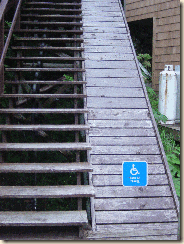
Elfin Cove.  No cars, no streets, -- just boats, basic services, and a boardwalk that connects everything, winding thru a rain forest from harbor to seafront.   What a place – the picture below is the wheelchair ramp on the boardwalk – about 30 feet high,  a 45 degree angle!  Yeah, right! Someone had lots of time on their hands!  WheelchairRamp
 

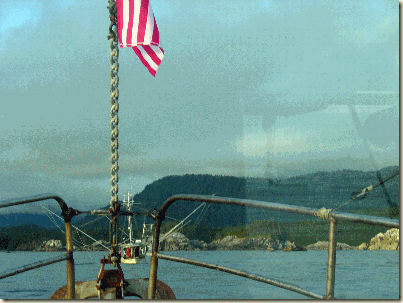
We pulled into the inner harbor, and were met by Kurt from the Jager – a welder/machinist fisherman from Sitka that I had only met once thru Steve of the Point Amelia.  He has fished here for years, and made us very welcome, showing us the facilities and giving us tips on how to keep in areas that were safe for newcomers.  (If you are a troller, please skip the next sentence. )  He even let us follow him on Saturday, charting a couple of nice drags, and the way thru the rocks (!!literally) into Hoktaheen Cove for the night.  The picture shows us following them – yes, the anchorage is on the OTHER side of those rocks! 
IntoHoktaheen

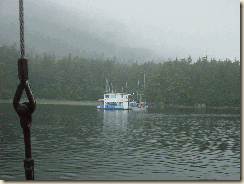
The next shot shows what it looks like from inside.    

InsideHokataheen


We find the fleet here to be very down to earth, capable people that don’t seem to be as angry and intense as some of the other areas we’ve been.  More a sense of community here – I know I sure feel greatly relieved fishing here, knowing there are at least 5 other boats I can call on for help or advice – that’s a bonus I haven’t known in Sitka.

Saturday, our first day to fish here, was beautiful.  The ocean was calm, and the sun shined on and off throughout the day.  I had Lovie at the wheel while I set gear, and I no sooner had my first line down than she yelled, “Fish on!”.  I continued to set my other three lines, all instantly jerking and bobbing with the strikes of fish.  I pulled them in, getting a mixed bag of pinks(humpies) and silvers(coho).  Pinks we can sell for about a quarter a pound, so we kept them in a separate bag.  Not real money makers, but 60-100 bucks a day pays the gas.  I quickly learned what they were hitting and removed those lures, so we would catch more silvers.

ScowGirls2

I kept putting out gear, pulling in gear, conking fish, cleaning fish, all day.  I was exhausted!  I’ve since learned to let the lines go for a while after you see fish hit – you don’t wear out so easily,  and the fish already hooked seem to attract others, so the hooks tend to fill up better.  We learn! 

Fog is a common item here, and it is THICK!  Thank goodness for radar.  I have added a couple of shots here – one of the radar screen – the black dots are boats; the next is the view from the front of the boat, showing you what you see with the naked eye.  Quite a difference!  RadarOne  


RadarTwo


One thing happened during the day that was special.  This borders on the delusional and mystical, so if you have a problem with that, sorry.  This is how it was to the two of us.  It was my dad’s birthday, so he was on my mind more than usual.  I was tired, realizing how close to the edge of the known world we really were, and wondering where the point was that you fall off, as I’ve wondered a lot during the last months.  Back in the pit, I had a moment to look around between activity, and I saw a brown, furry head directly behind the boat about 50 feet.  Sea lions are hated here, because they rip salmon off your hooks, taking gear and all, causing lots of dollar loss.  I first thought it was a sea lion, and yelled at it.  It swam closer, and I realized it was a small brown seal, curiously raising it’s head out of the water and examining me.  It came up to about 1o feet from the boat, looking us over, then using its flippers, smoothly flipped out of the water a couple of times, as if for fun.  For almost 5 hours, it followed us, swimming close to the boat contentedly.  Looking eye to eye at it, I felt a sense of comfort that I really needed.  It seemed that my dad, gone from us for almost a couple of years now, was there with us, reassuring us in some way.  Dad always loved to swim with flippers, and this little guy did, too.  With tears streaming, I told Lovie, “PawPaw has come to cheer us up!”.  Later, I told her how I had cried alone in the pit, and she said she had to go inside so I wouldn’t see her weep also!!  Small or large miracles, believe what you will, that’s the way it was.  Thanks.

At the end of the first day, we made our way behind two other boats into Hoktaheen Cove, a small, exposed cove that offers anchorage in moderate weather.  A fish buyer from Excursion Inlet is there every other night, so we were able to sell our fish and get fresh ice.  75 coho, 65 pinks – not bad for the first day!  The check for over 700 bucks didn’t hurt my feelings any, either – first positive cash flow in a long time!  We took loads of Advil, slept 5 hours, and headed out at 5 to fish again.  Same story, second day.  Monday, same thing.  Fish, fish, fish. 


I love to look down into the crystal clear water, 50-60 feet down, and see hook after hook with the grey-green torpedo shape of the coho trailing along.  We travel at about 3 knots, so they just swim along for the ride, waiting for me to try to gaff and land them.  We caught one that was twice the size off the others, about an 18 pounder.  Most are averaging just under 6 pounds now, but they will grow at a rapid rate as the season progresses.  By September, the weight average is projected to be almost twice what we see now.  Or so I’m told!  Guys here have really encouraged me, saying this is only practice for the real season – get a broom to lash to the mast if you clear $100,000 – a number of boats do that every year here.  If I do a quarter of that, I will think things were a rousing success for the first year!  There is hope!

We went up the mouth of Lisianski Inlet to escape some Southwesterly weather a couple of nights ago, and sold our fish to the Shoreline scow.  Scowgirls3
It is manned (??) by a bunch of tough young ladies who live and work on a big floating scow that’s anchored in a little cove.  You tie up to either side, and they offload your fish, resupply you with ice, and give you money!  Nice.  They are a pleasant group – I saw similar qualities in them that some of our Montana gals have – tough, capable, and good-looking!  The place has some basic supplies, a free shower, washer/dryer, sauna, and cupcakes!  Pretty cool.  I’ve posted a shot or two of the scow – sign on the door says “Scowgirls Kick A__” .   Says it all, eh?!

ScowGirls

Well, that’ll do for now.  Sure nice to be here in harbor – some old guy in a boat just down the way is playing a fiddle – better go see what that’s all about!  Should have brought the guitar! 

Fish On!

Wednesday, July 21, 2010

Elfin Cove

Wow.  What a week!  A whole new phase of life has evolved for us in the last few days.  This will be a short post, as we only have a couple of hours in the Cove before the tide goes so low we can’t get out, and we need to get back to the fish.  We have been in here twice – anchored in Hoktaheen Cove on Yakobi Island for the other nights since it’s closer to the fishing grounds.  ElfinCove1

Elfin Cove has phone service, fuel, post office, store, and showers, but we haven’t been here during business hours yet!  Got to get a few things in the mail and at least get tokens for the shower so we can clean up next time we are in.  A week is a long span between…!

The trip was long – 3 days of traveling – and had some interesting moments.  The trip was worth it so far – about 200 cohos in 3 days, and the same number of humpies (pinks).  The picture says it all – our first delivery to the fish tender, a big boat that comes out to where the fishing is and buys fish and supplies ice to us – Lovie was glad to get them sold!   This is only half of them. CohoLovie

The work is a bit intense – up at dawn (4 am or so), anchored at 9 or 10 pm, setting gear, checking gear, conking fish, cleaning fish, icing fish over and over.  I’m beat! 

Well, lots to take care of. Better info next post.

Sunday, July 11, 2010

The Good, The Bad, The Ugly

Darkness falls late at this time of year in Sitka.  It was Friday, July 9, at 11pm, and we gathered along the banks of the channel between Japonski Island and the main harbor area of Sitka with hundreds of others waiting to see the fireworks display that had been delayed several days due to weather. 

MapleCandles

An unusual silence fell over both sides of the channel, and on the far shore, as well as our own, we began to see little lights appear, eventually stretching as far as we could see down the docks and wharves.  Candles, and silence.  Fifteen minutes – unusual for any amount of people anywhere to be quiet.  Then, from the far end of Japonski, across from Tomsen harbor, three parachute distress flares soared into the low-hanging clouds, slowly descending with their brilliant red light creating eerie, glowing spheres.    Jayhawk

Three flares, three lives.  We lost three of our most respected and valued people on Wednesday in a tragic helicopter crash as they returned to Sitka from Washington state.  The pictures you have seen here of the Coast Guard helicopters – one of those, quite likely the same people who were piloting them – gone.  Those we count on to save us in our distress, victims of time and chance.  I weep as I write, not knowing the men, but mourning the loss, the pain their families must know.  Peace to them.

Another few moments of silence, the Coast Guard cutter Maple anchored nearby gave two long, sonorous blasts of their horn, and the fireworks began.  The rockets and starbursts, mortars and glittering fountains, all familiar to most who have seen fireworks, somehow made magical by their glowing in the clouds and over the stillness of the waters of the channel.  The concussion of the mortars and the screaming whistles were heard once, then twice, three, four times as they echoed off the warehouses and and hills of the far shore.  The finale shook with multiple booms reverberating all around us, and horns honked, people yelled, and we began walking back to our little boat in the harbor. 

Never thought my bride and I would be walking in the rain at midnight, along the docks of a fishing town, holding hands and enjoying the light drizzle of rain on a 50 degree summer night in Sitka.  Life takes some interesting twists and turns, not all enjoyable, but somehow most seem to fit together to weave the complex texture that is our individual world.

Deckhands Life

The summer king salmon opening was over at midnight, Thursday the 8th.  Most of the trollers have returned to the harbors, offloaded, and holed up waiting for the weather to improve.  We’ve had a fair stretch of large swells, wind, and fog for much of the opening period, and the general question I hear from everyone is “Where are the fish?”.  It seems we were in the only spot that really produced anything on opening day – the Cape was a bust, North wasn’t good, South was marginal.  People chanced into pockets of activity here and there, but I am led to believe that the “typical” summer king run isn’t happening.  Opinions range from global warming to Obama as the cause – whatever it is, I don’t feel so bad for the relatively small number of fish we caught in our bumbling, beginning efforts.  Some of the best fishermen around only caught twice as many as we did, so that’s acceptable in my book.  Of course, they didn’t release 25 cohoes thinking they were undersized kings like I did – a couple of hundred bucks worth, until I realized what they were….!  Lovie will never let me forget it!

After the last post, we went back down to the Biorka/Hot Springs area and explored some of the twists and turns between the islands.  Monday, the weather turned snotty, and we holed up all afternoon and night with 15 other trollers in the anchorage at Hot Springs bay.  I sat and watched the trees swaying and the wind whipping ripples across the sheltered waters of the anchorage.  A couple of small open skiffs came in from somewhere, deposited people on the shore to go up to the tubs, then anchored close enough for their shore lines to retrieve the skiff when time to leave.  As the wind turned us this way and that, I noticed one of the skiffs seemed to be slowly moving toward the main channel.  As it progressed, it became obvious it had dragged anchor, and was adrift, heading out with the wind and tide to the rocks on the entry side of the bay.  I got Lovie to fire up our engine, went forward, hoisted the anchor, and gave chase.  We caught up, snagged it with a boat hook, and attached a light line to tow it away from the rocks.  Looking back at shore, we saw a figure swimming toward us.  The owner had a wetsuit, had seen it drift off, grabbed a paddleboard and gave chase.  We got a “thanks” when we towed it back to  him, and that was all, but we felt good about it!  Back to anchor, read books, and listen to the wind and rain singing.  Hand Troller at Hot Springs

The next few days were spent exploring some of the island passages and bays in the general area.  We sneaked thru Dorothy Narrows at high tide, with inches to  spare under our keel, fished Windy Bay for a big zero fish count, and squeaked back thru with even fewer inches to spare!  We tried to work our way thru the Necker Islands, but the combination of wind and swell from the southwest was too much for my timid blood.  I get really nervous about being in a cauldron of waves and cross swells, with tide running, rocks on both sides, and not knowing the area!  The fact that no other boats were in sight makes me really puckered up, too –no help if it all goes wrong.  I really don’t want to be a brick on the memorial wall at Sitka…!

Now, we’re planning our next move – we can fish Coho or chums – no more kings for a while.  Looks like we may head north with a couple of other boats and try our hand at some Coho fishing in the Cross Sound area.  The trip up is sort of intimidating – a couple of days, depending on weather, off the outside coast of Chichagof and Yakobi Islands.  The charts show a bazillion rocks, but according to a friend, there are lots of places to pull in and wait out bad weather.  Once there, the fishing sounds good – I’m just sort of a scaredy cat, easily intimidated by the unknown.  Must be nice to be a person of undaunted courage, not letting your overactive imagination conjure up wild visions of disaster and failures!

Lovie scared the boots off of me on Tuesday – we were running slowly back toward Sitka with a nine or ten foot swell boosting us along.  I put her on the wheel (she loves to be there!), and I sat in the door reading a book as we worked our way along, well above the random rocks lining shore side of the area – something awe inspiring about being a couple of miles offshore, and seeing the huge swells break on submerged rocks, soar 20 or 30 feet in the air, and subside, leaving a frothy white foam on the surface. 

Nice Day and Rocks

Suddenly she let out a scream, obviously panicked.  I leaped up to see what we were about to hit, and she blurted out, “Huge whale! Right in front!”.  Well, it was gone by the time I looked – we never saw it again, but a whale twice the length of our boat had surfaced, blown, and submerged about 50 feet in front of us!  She wasn’t expecting anything for miles, and suddenly, there it was, dead ahead and huge!  We both woke up for a few more minutes!

Well, we’ll be sitting out the next few days with everyone else – nasty winds and bad fishing are keeping everyone pretty close to home.  Hopefully it will get nicer as the week progresses, and we can begin the next phase. 

Stay tuned!

Sunday, July 4, 2010

The Big One

Well, it finally came  -- the big King opening.   Fish and Game says 6-10 days, and we are on day 4.  How do I have time to write this?  It’s Sunday, and we came back to Sitka last night to unload, re-ice, get a shower, and recharge for 24 hours (us, that is, not the batteries)!  More than half the fleet is back in town for the same, and  the  weather is cooperating fine – blowing 25-30 knots last night when we came in, and is supposed to continue into this evening.  Not impossible to fish in, just tiring.   We plan to go back down among the little islands to the south this evening, and see how many more we can coax out of the nooks and crannies.  Ever look at a detailed chart of this part of the world?  There are lots of little bays and islands, and fish all around.Opening Day Fish

We were one of the last boats out of the harbor for the big one – Tuesday and Wednesday were frenetic around here, big beautiful boats and old scabby ones with bilge pumps running non-stop, all getting ready for the big lottery of finding the mother lode of fish.  Being new, I had no real plan, other than to go to Cape Edgecumbe or Salisbury Sound, or ??? wherever…

The charter fleet and the commercial fleet both look down their noses at the other, but we have made friends with a really nice charter guide.  He made a comment about the large number of fish they were finding out at Biorka Island, so we decided to try it for lack of better knowledge.  After a couple of hours sleep Wednesday night, we headed out at 2 am for the hour and a half cruise to the island.  It was beautiful weather, hardly any swell, no wind or chop, just radar driving since it was the darkest part of the night when we left.  As we neared the grounds, we saw about 40 or 50 anchor lights – seems like a lot of other people had heard the same report, and all went out and overnighted in Symonds Bay, on the Island.   Anchored Neighbors    As soon as you could see your hands, we were all putting gear in the water, trying to fish the same contours, depths, and speed – what a zoo!!  I put Lovie on the wheel, told here where we wanted to go, and to not hit anyone!  Boats were cutting in, cutting across, guys trying to run their gear alone, a regular madhouse.  To top it all off, we all were immediately catching nice fish.  No sooner would  I get a line in the water than Lovie would yell, “You have a fish on your port wing line!”, and I’d pull it up, conk a fish, re-bait, and drop the line again.  From 3:30 am till 1pm, I raised, lowered, conked, gaffed, gutted and gilled, washed, and packed fish in ice in the hold.  Lovie, bless her heart, had a baptism by fire about driving in a cut-throat fleet all trying to maximize their catch.  Cutthroat is a harsh word, these are 95% nice folks, but so are the guys who crowd you out on the freeway!

I learned so much about managing my gear – being efficient and keeping gear in the water to fish at all times is really important when you are in a big bunch of fish.  Ok, before you all get to thinking we sunk the boat with thousands of pounds of fish, we sold 34 kings when we landed.  I was hoping for 100, but would have been glad for 20.  Prices have dropped, as I figured, so this first jaunt just paid a couple of monthly bills, not even all of them!  We hope the season is the 10 day one, as it would give us amateurs a bit more chance to find more,  but we’ll see. 

We fished our way along thru some of the many small islands and bays south of Sitka, including an anchorage in Hot Springs bay – we have to go back and soak in the springs there.  Tired Puppy In Hot Springs Bay   This time, we were too involved in trying to catch fish while the kings are legal, so had to pass.  Friday was nice weather, so we ventured out in the big water outside Biorka – mostly caught cohoes there, but it was fun to get out off the coast a bit in nice water.  I wouldn’t want to be out there tonight!

Well, we’re off again this evening, so stay tuned…!